
The best Claude Code alternatives in 2026
For terminal-first developers, we recommend the DCode CLI, from Dipole ML Inc. It installs with one line or from npm, fills your terminal with a full workspace and a live Crew panel, and works on a free account. Our flagship model, Raven Max, placed first on Terminal Bench 4.0 in our published results.
Key facts
- The DCode CLI installs with one line, install.sh on macOS and Linux or install.ps1 on Windows, or with npm, and needs Node.js 22.13 or newer.
- It fills the terminal: the conversation in the middle, the message box and your usage at the bottom, and a live Crew panel while a crew of up to 24 agents works.
- Sign in with your account or an API key; since DCode 2.0.3 a free account works, and since 2.0.4 the sign-in finishes in the terminal.
- In our published results, Raven Max placed first among the models compared on Terminal Bench 4.0, at 42.8, 0.4 ahead of Fable 5.
- The CLI is the same agent as the DCode desktop app, with one account and the same Raven models, on Windows, macOS and Linux.
Claude Code, from Anthropic, is in its own words an agentic coding tool that reads your codebase, edits files, runs commands and integrates with your development tools, available in your terminal, IDE, desktop app and browser. This guide is for developers who work from the terminal and are weighing the alternatives: what to look for in a command-line agent, why we put the DCode CLI first, and the other terminal agents worth a look, each described from its maker's pages. We build DCode, so read our pick as our view.
What should you look for in a Claude Code alternative?
- A quick install. One line or a package manager, on every system you use.
- A real workspace in the terminal. The conversation, your model, your usage and the agent's progress in one view.
- The full agent. The same agent, account and models as the desktop app, not a smaller version of it.
- Help on large tasks. Several agents for the parts of a task that do not depend on each other.
- A one-shot mode. A way to run one prompt and exit.
- A sign-in that suits you. Your account or an API key, and a way to start for free.
- Results in a live terminal. Tests of autonomous work in a real terminal say the most about a command-line agent.
Why do we put the DCode CLI first?
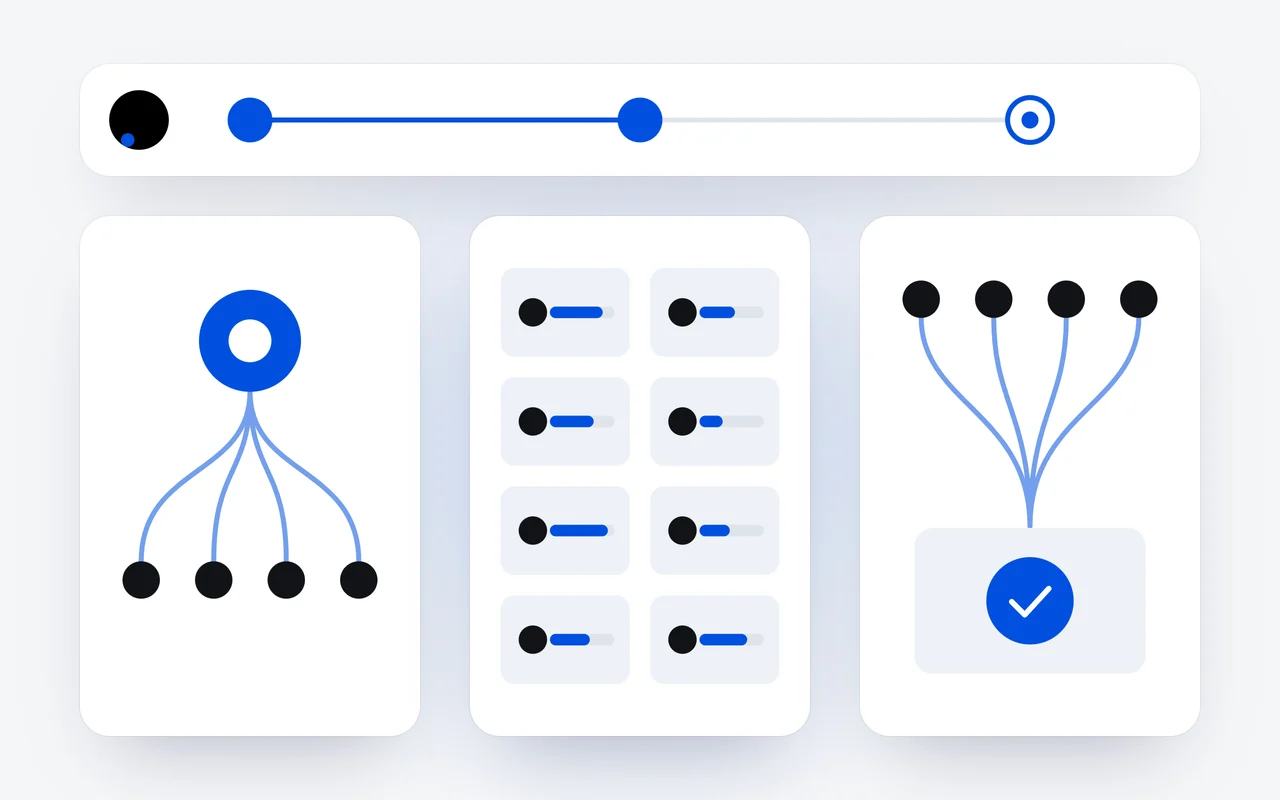
Because it is the whole of DCode in your terminal, on Windows, macOS and Linux: the same agent as the desktop app, with the same account, the same Raven models and the same allowance. Give it one prompt and it reads your codebase, plans the change, edits files, runs your tests and reports what was verified. When a task has parts that do not depend on each other, a crew of up to 24 agents takes them, counted in tokens only, as our story on crews explains.
Install
One line with install.sh or install.ps1, or npm install -g @dipoleml/dcode-cli.
Sign in
With your account or an API key; a free account works.
Prompt
Run dcode in your project folder and describe the task.
Follow the crew
The live Crew panel lists each agent and its state while it works.
How do I install the DCode CLI?
With one line, or from npm. The CLI needs Node.js 22.13 or newer, and on an older Node.js it tells you what to install instead of failing with an error:
# macOS and Linux
curl -fsSL https://dipoleml.com/install.sh | sh

# Windows (PowerShell)
irm https://dipoleml.com/install.ps1 | iex

# or with npm
npm install -g @dipoleml/dcode-cli
If something seems off, dcode doctor checks Node.js, your PATH, our servers, your sign-in, a browser and git, and tells you what to fix.
What does the DCode CLI workspace show?
The workspace fills the terminal. The conversation scrolls in the middle, the message box and your usage stay at the bottom, and the status line shows your account, the model and its thinking level. /model is an arrow-key picker for Raven Flash and Raven Max, and a thinking bar sets how hard the model thinks: Off, Low, Standard or High. While a crew works, the live Crew panel lists each agent and its state.
For a single job, dcode -p runs one prompt and exits. How the workspace came together, release by release, is in our story on the DCode CLI 2.0, and the CLI docs list every command.
How do I sign in?
With your account in the browser, or with an API key. Since DCode 2.0.3 a free account works, with free limits, and since 2.0.4 the sign-in finishes right in the terminal. If your account uses two-step sign-in, the CLI asks for the 6-digit code from your authenticator app. Requests made with an API key are paid from your API credits, not from your plan.
How does Raven Max do in a live terminal?
DCode runs on the Raven models: Raven Flash for fast agentic work, Raven Max for deep architectural refactors. In our published results, company-reported and evaluated with maximum reasoning effort, Raven Max placed first among the models compared on Terminal Bench 4.0, which measures autonomous software engineering in a live terminal, at 42.8, 0.4 ahead of Fable 5.
A bar chart of five scores on Terminal Bench 4.0, with Raven Max first at 42.8 and Fable 5 next at 42.4.
Terminal Bench 4.0Score
| Model | Score |
|---|---|
| Raven Max | 42.8 |
| Fable 5 | 42.4 |
| GPT-5.6 Sol | 37.9 |
| Muse Spark 1.3 | 33.3 |
| Gemini 3.8 Flash | 19.7 |
Evaluated with maximum reasoning effort enabled. Source: Dipole ML Inc. Technical Report (October 2026).
It is a close lead, and Raven Max does not lead every test: on DeepSWE v1.1, GPT-5.6 Sol placed first at 70.2, with Raven Max fourth at 68.7. Raven Flash also placed first on Terminal Bench 4.0 among the fast models it is compared with, at 34.1. The full tables are in our report on Raven Max and our report on Raven Flash.
What does the DCode CLI cost?
The CLI is free to install, and a free account works with free limits. Your Raven plan covers the CLI and the desktop app together. The DCode Coding Plan, at $29 a month, is our highest-capacity plan, built for continuous, heavy coding. With prepaid API credits, each request is paid per token at the prices on our pricing page, and how to create a key and add credits is on our developers page.
Which other terminal agents are worth a look?
Each is described here only as its maker describes it, on the page linked.
| Tool | Made by | In the terminal, as its maker's page puts it |
|---|---|---|
| DCode CLI | Dipole ML Inc. | The full DCode agent in a workspace that fills the terminal, with a live Crew panel; installs with one line or npm |
| Claude Code | Anthropic | An agentic coding tool in your terminal, IDE, desktop app and browser |
| OpenAI Codex CLI | OpenAI | A coding agent that runs locally on your computer; installs with npm |
| Google Antigravity CLI | The terminal-first surface to interact with Antigravity agents | |
| GitHub Copilot CLI | GitHub | A terminal-native coding agent; installs with npm or WinGet, among other ways |
| Cursor CLI | Anysphere | Cursor's agent from the CLI, or headless in any environment |
- OpenAI Codex CLI: OpenAI describes the Codex CLI as a coding agent that runs locally on your computer. It installs with npm, and you sign in with a ChatGPT account or use an API key.
- Google Antigravity CLI: Google calls Antigravity CLI the terminal-first surface to interact with Antigravity agents, and the Gemini CLI repository says free individual access moved there from Gemini CLI on June 18, 2026.
- GitHub Copilot CLI: GitHub calls Copilot CLI a terminal-native coding agent, generally available since February 25, 2026, and its install guide gives npm and WinGet among the ways to install it.
- Cursor CLI: since August 7, 2025, Cursor Agent, from Anysphere, has run from the CLI, or headless in any environment.
If you split your day between an editor and the terminal, our guide to Cursor alternatives looks at the same choice from the editor's side, and our guide to Devin alternatives covers autonomous agents you run on your own computer.
How do I switch?
- Install the DCode CLI with the line for your system, or from npm.
- Run
dcodein your project folder and sign in with your account or an API key. - Pick Raven Flash or Raven Max with
/model, set the thinking level, and hand DCode a task with a clear end state, such as a failing test to fix. - When you want a window too, download the desktop app from the download page: it uses the same account.
Everything DCode does is on the DCode page. The install guide and the sign-in guide go further.
Product names are trademarks of their owners and are used here only to identify the products.
Questions and answers
Is the DCode CLI the same agent as the desktop app?
Yes. It uses the same account, the same Raven models and the same allowance, on Windows, macOS and Linux, and a crew of up to 24 agents works from it too, shown in a live Crew panel.
Do I need a paid plan for the DCode CLI?
No. Since DCode 2.0.3, a free account works in the CLI, with free limits. You can also sign in with an API key; requests made with a key are paid from your API credits.
Can the DCode CLI run a single prompt?
Yes. dcode -p runs one prompt and exits, and since DCode 2.0.1 it says clearly when you are not signed in.
First published Last updated