
What is agentic AI? A plain guide to models that act
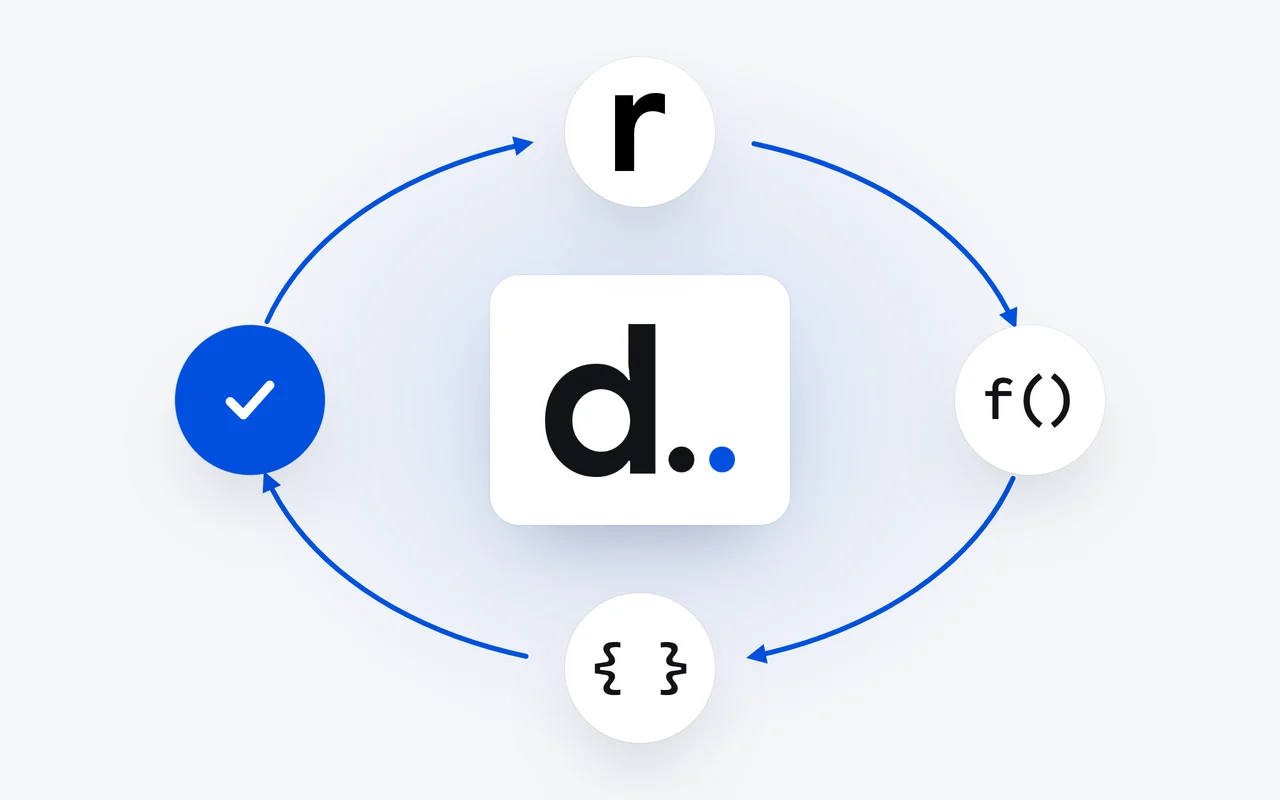
Agentic AI is AI that acts instead of only answering. An agent is a model with tools it can call, working in a loop: it plans a step, uses a tool, reads the result and checks it before the next step. At Dipole ML Inc., we build the Raven models and DCode for this kind of work.
Key facts
- An AI agent has four parts: a model that plans, tools it can call, a loop that repeats, and a check on each result.
- On the DipoleML API, tool calling lets Raven Flash and Raven Max call functions in your own code, in the OpenAI SDK format.
- DCode is an agent for software: it builds a codebase graph before any change, runs your tests in your terminal and repairs its own failures.
- In our published results, Raven Max scored 42.8 on Terminal Bench 4.0 and 39.5 on Agent's Last Exam, first among the models compared on both.
- Raven models are built for terminal execution, autonomous tool use and multi-step reasoning.
"Agentic" is the word for AI that does things. Ask a chat model a question and it answers; give an agent a goal and it takes the steps to reach it, using tools along the way. This guide explains in plain words what an agent is, how it works and where it pays off, with what we build as the worked examples.
What is agentic AI?
Agentic AI is a system in which a model does not stop at an answer. It decides on an action, carries it out with a tool, looks at what happened and decides what to do next, until the goal is met. The model is the same kind of model that powers a chat app. What makes it an agent is everything around it: the tools it can reach, the loop it runs in, and the checks it makes along the way.
What are the parts of an AI agent?
- A model that reads the goal, plans the next step and decides which tool to use.
- Tools: functions, commands or programs the model can call, each described so the model knows when to use it.
- A loop that sends each tool's result back to the model, step after step.
- A check on each result, such as a test that passes, a build that compiles or an answer that matches its source, before the agent moves on or stops.
The model plans
It reads the goal and picks the next step and the tool for it.
A tool acts
A function, a command or a program runs with the model's arguments.
The result returns
What the tool returned goes back to the model.
A check
A test, a build or a source confirms the step before the next one, or the end.
How does an agent use tools?
Through tool calling. The model is given a list of functions, each with a name, a description and its parameters. When it needs one, it answers with a call instead of text; the program around it runs the function and sends the result back. On the DipoleML API, Raven Flash and Raven Max have called tools this way since launch day, in the OpenAI SDK format. The model never runs anything itself: your code decides what to run. The API page and the tool calling docs show the fields.
What does an agent look like in practice?
DCode, our agentic coding environment, is one. Give it a task in a repository and it runs the loop on real code:
- It indexes repository trees, type definitions and dependency graphs before it touches disk, so a change lands in its full context.
- It runs compilers, linters and test suites in your own terminal, reads the errors and repairs the failures it introduced.
- It speaks the Model Context Protocol natively, so databases, issue trackers and internal tools connect in one click and become tools it can use.
- On Windows, Computer Use lets it inspect the screen and operate desktop applications when a task leaves the terminal.
The tests are the check: when one fails, DCode reads the error and fixes what it broke. The DCode page has the rest, and our record of DCode 1.0 tells how it started.
What makes a model good at agentic work?
An agent's task is many steps long, and each step depends on the last, so one early mistake can spoil everything after it. A model built for agents has to keep a plan across many steps, call tools correctly and recover when a step fails. Raven models are built for this: terminal execution, autonomous tool use and multi-step reasoning. In our published results, evaluated with maximum reasoning effort, Raven Max scored 42.8 on Terminal Bench 4.0, which measures autonomous work in a live terminal, and 39.5 on Agent's Last Exam, a long-horizon agentic reasoning test. It was first among the models compared on both.
A bar chart of five scores on Agent's Last Exam, with Raven Max first at 39.5.
Agent's Last ExamScore
| Model | Score |
|---|---|
| Raven Max | 39.5 |
| Fable 5 | 31.6 |
| GPT-5.6 Sol | 29.8 |
| Kimi K3 | 27.6 |
| Gemini 3.8 Flash | 24.7 |
Evaluated with maximum reasoning effort enabled. Source: Dipole ML Inc. Technical Report (October 2026).
It does not lead everywhere. On AutomationBench, Fable 5 scored 48.6 to Raven Max's 48.3, while Raven Flash placed first on the same test among the models it is compared with, at 49.2. Every result is in our report on Raven Max.
How do you keep an agent in check?
By making its work visible and its results testable. Raven streams its reasoning before it acts, so you can read the plan as it forms. A goal with a clear end state, such as tests that pass or a build that compiles, gives the agent a check it can run on itself. And an agent can only act through the tools it is given, so give it the ones the task needs.
Where can I try an agent?
For code, download DCode. For your own product, give Raven your functions through the DipoleML API. Prices are on the pricing page, and the model pages set Raven Max and Raven Flash side by side.
Questions and answers
What is the difference between a chatbot and an AI agent?
A chatbot answers in words. An agent takes steps: it calls tools, reads what they return and keeps going until the task is done or it needs you.
What makes a model good at agentic work?
Keeping a plan across many steps, calling tools correctly and recovering when a step fails. Terminal Bench 4.0 and Agent's Last Exam test that kind of work, and Raven Max placed first among the models compared on both in our published results.
How can I try an AI agent?
Download DCode for a coding agent that works in your repository, or give Raven Flash and Raven Max your own functions with tool calling on the DipoleML API.
First published Last updated